01 Was there a defining moment or specific event that made you seriously think about the meaning of making art?
03When you encounter material limitations or technical challenges, how do you usually respond or adapt?
05For those who have never experienced your work before, what do you most hope they see or feel? and why?
07If you had unlimited time and resources, what project would you most want to realize?What would it mean to you?
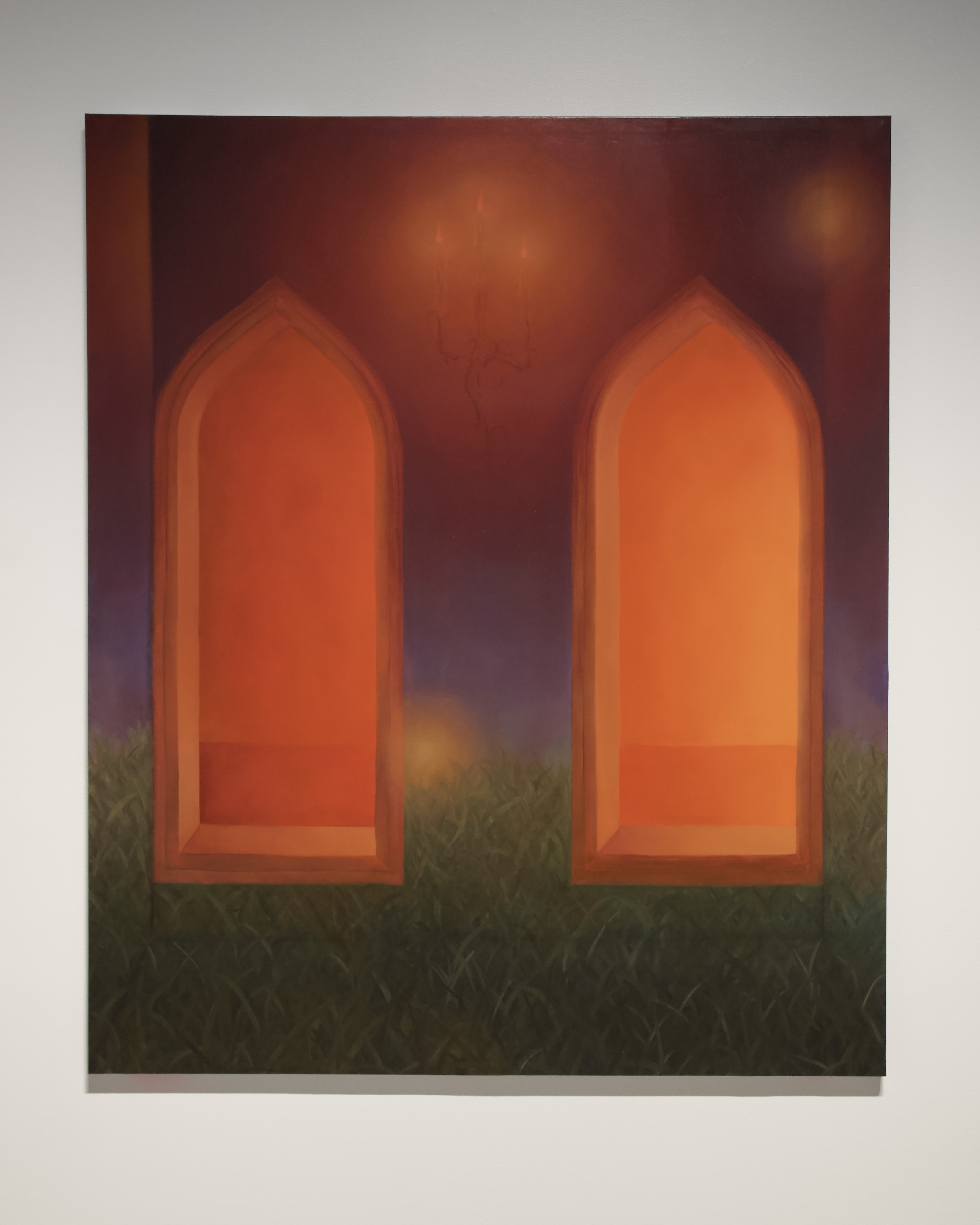
09Your paintings move between architectural spaces, portraits, and scenes that suggest particular memories or narratives. The architectural works, however, seem to leave more room for interpretation, allowing shapes, colors, and the physical handling of paint to carry emotional and symbolic weight without relying on a recognizable story.
What draws you to this less literal form of expression, and how do you understand the relationship between these different visual approaches in developing your own artistic language?
02 How do you balance rational thinking and intuitive expression in your creative process?
04Do you mind if viewers interpret your work differently from your original intention? In your opinion, does the artwork belong to the audience once it is completed?
06 Have your personal life experiences, such as geography, culture, family, or education, influenced your practice? Could you share an example?
08Your decision to move away from photographic references seems closely tied to reclaiming your own way of seeing and understanding reality.
Yet photography itself can also challenge dominant ways of seeing, as demonstrated by Will Wilson’s Critical Indigenous PhotographicExchange, which reexamines colonial representations through collaborative portraiture. What specifically felt limiting about photographic references in your practice, and how has moving beyond them changed the way you construct and communicate your own sense of reality through painting?
10In Pappy’s Waiting Room, you return to architectural forms that appeared in The Waiting Room, now in the context of remembering your father.
While these works emerged from different moments in your life, they seem to share a visual language that has taken on new emotional significance.Has creating the later work changed the way you understand the earlier one?
More broadly, do you feel that the meaning of an artwork can continue to evolve alongside the artist’s own life and experiences?
How do you balance rational thinking and intuitive expression in your creative process?
Pablo Picasso once said, “It took me four years to paint like Raphael, but a lifetime to paint like a child,” and I think about that a lot. I think one of the hardest parts of making art is learning how to get out of your own way. There’s a certain point where having the technical knowledge to make a painting work can actually become a barrier to making something that feels instinctive and true to you. I tend to think of a painting as an equation, where every decision affects the balance of the whole image. Some things fall into place naturally, while others can throw everything off. There’s a rational process involved in figuring out what makes a painting work, but at the same time, I have to leave room for things that might not make sense logically, to follow an impulse without immediately questioning it. I think painting is a lot like dancing. You’re constantly making adjustments, but there’s a point where you find a rhythm and stop consciously thinking about every movement. I’m always trying to find that sweet spot where the structure is there, but it doesn’t interfere with the freedom of expression.