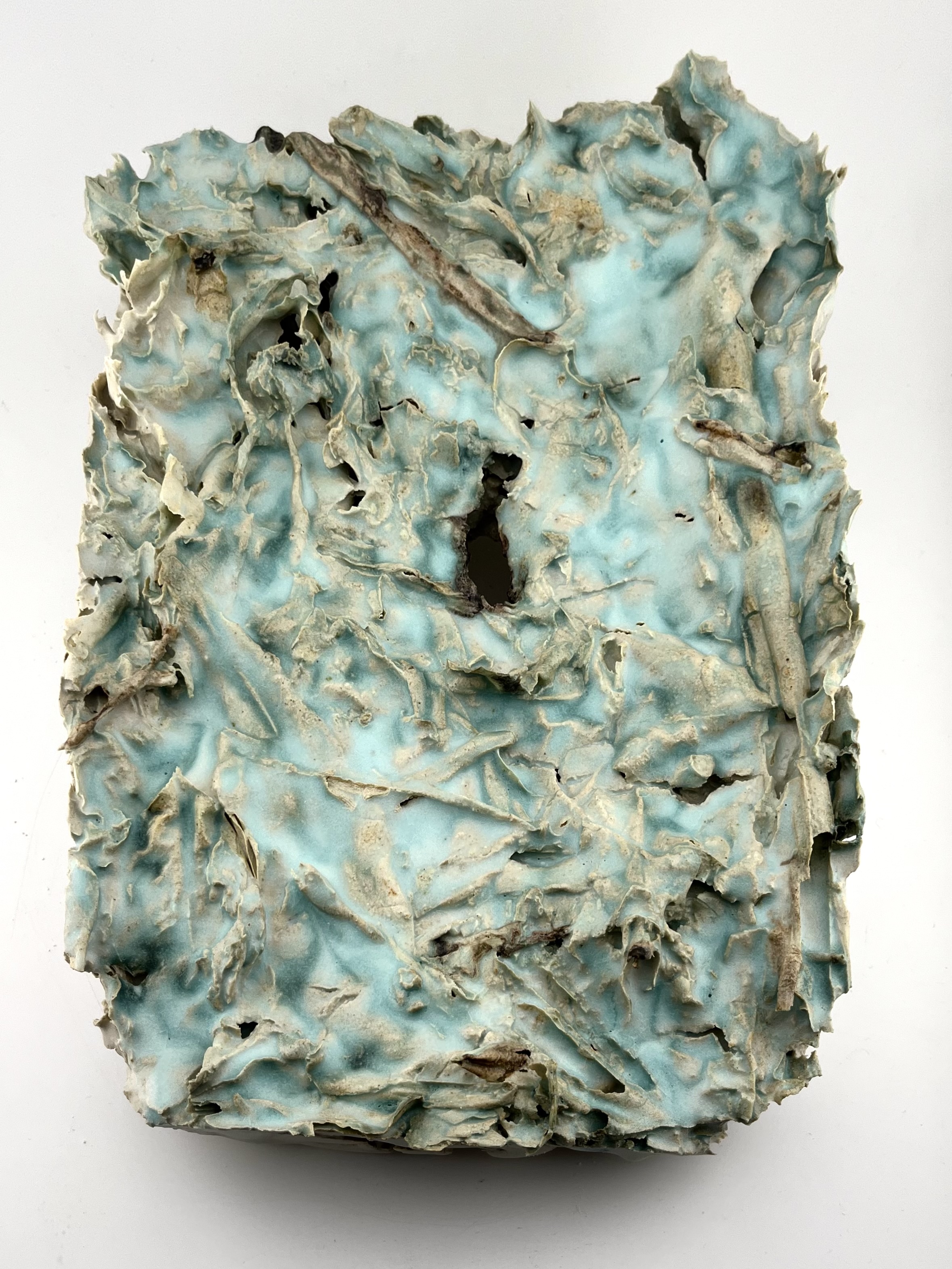
A mass of dead flowers is submerged in liquid clay, leaving behind a rough, fragile-looking ceramic surface. Stems, petals, and broken floral forms appear caught inside the object, as if something temporary has been pressed into a more lasting state. Brooklin uses clay not simply to cover the flowers, but to record their shapes, textures, and disappearance. Through firing, these organic remains are transformed permanently as ceramic. The blue-green surface, darkened edges, and uneven tones come from real chemical interactions between clay, glaze, copper stain, and the floral material. The work holds decay and preservation together: the flowers are gone as living things, yet their traces remain fixed in the ceramic body. What was once soft and temporary becomes mineral, hardened, and strangely enduring.